Seaweed in Andalusia - Not What You Thought
Andalusia. The southern Mediterranean coast of Spain, with a vast continental landmass to its north. An empire of olive oil, fish, and seafood. A lot of culinary history influenced by the Muslim rule of the Moors (Al-Andalus) and also by the Jewish Golden Age, alongside the familiar Spanish influences after the discovery of America. After a week-long trip in October, during which I visited 3 cities - Jaén, Córdoba, and Málaga, I feel like talking about seaweed.
We are mostly familiar with it from Japan in soups, salads, or with sushi. Nori seaweed for sushi and hand rolls, wakame seaweed, kombu seaweed, etc. In Spain too, along the coasts, there is an abundance of different seaweeds, and it turns out that top chefs in Andalusia are very fond of them as a raw ingredient.
For example, I ate a dish at a Michelin-starred restaurant called Dama Juana in Jaén: a squid tartare with pine nut ajo blanco and seaweed. A wonderful combination of sea and land flavors.
At a two-Michelin-starred restaurant called Bagá in the same city, there were several dishes where seaweed was a central ingredient. For instance, beetroot in Codium seaweed, where they wrap the humble beetroot in seaweed, bake and smoke it for about 48 hours. Maybe more. They immediately vacuum cool it. After that, they do all sorts of other processes. It's served in a stunning, silky green sauce of Codium seaweed. I don't think I've ever eaten a tastier beetroot in my life.
A dish that was purely seaweed was no less wonderful. Nori seaweed undergoes a process of about 4 days of soaking, softening, and cooking, and is served in a seemingly classic French sauce usually associated with fish, a beurre meunière sauce with butter, lemon (vinegar), and capers. A dish with a soft, delicate, silky texture. One that caresses the palate and has amazing flavors. Something difficult to explain in words. Probably the most incredible and unconventional seaweed dish I have ever eaten.
In Málaga, at an excellent one-Michelin-starred restaurant called Kaleja, I ate a cold gazpacho soup based on lettuce and jalapeños, poured over a sort of coarsely chopped tuna ceviche, Codium seaweed tempura, olives, and shallots. This tempura was amazing and added both texture and wonderful marine-herbal flavors.
And unrelated to seaweed, at a traditional tapas bar in Jaén, I also ate a kind of sea chip made from sea anemones (which are actually living marine creatures) that reminded me, with its saltiness and herbaceousness, of seaweed flavors.
In short, seaweed can be a particularly interesting and incredibly tasty business in the hands of the right chefs. There is life beyond hand rolls.
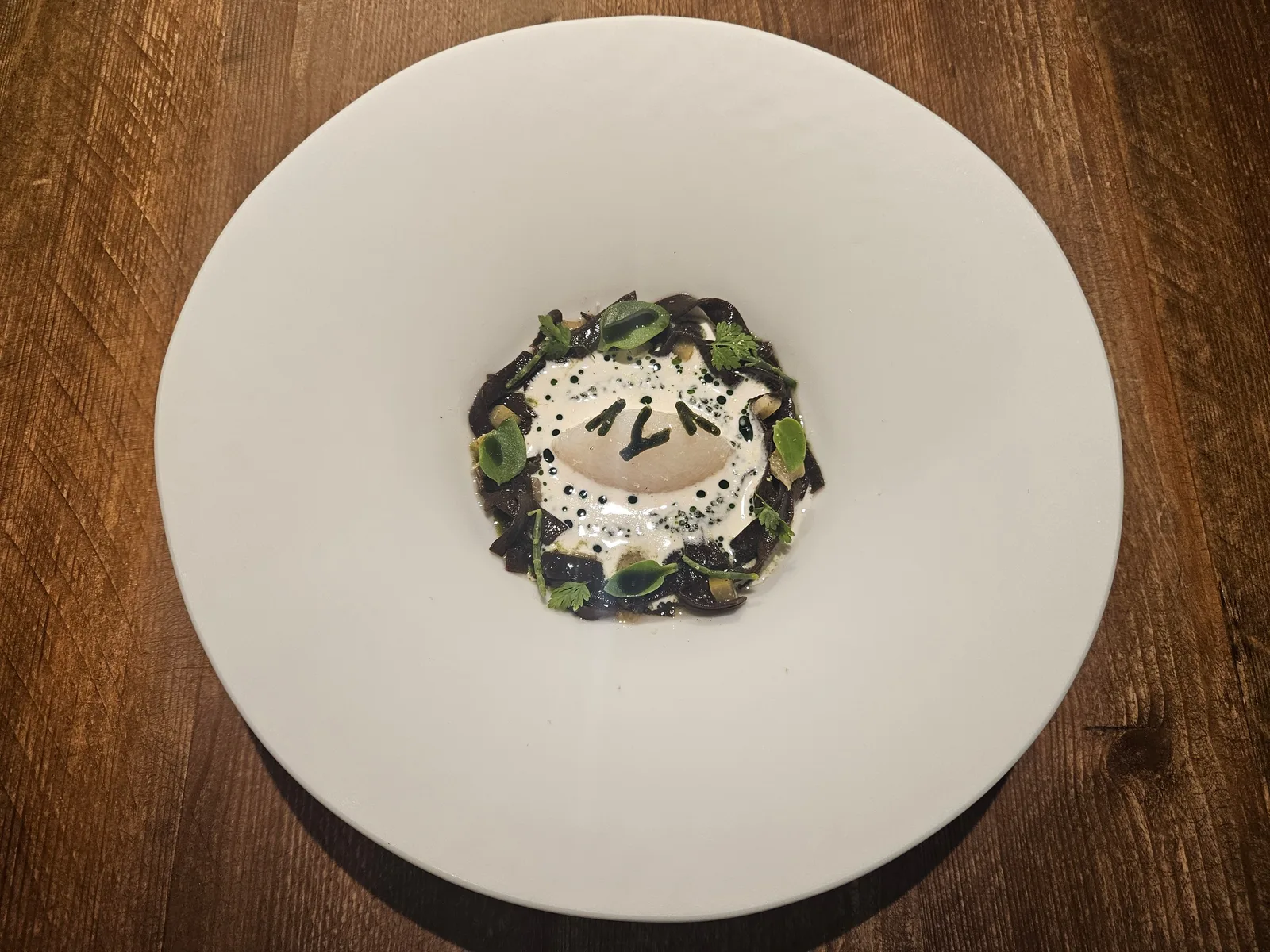
Places & dishes in this post3 places · 4 dishes
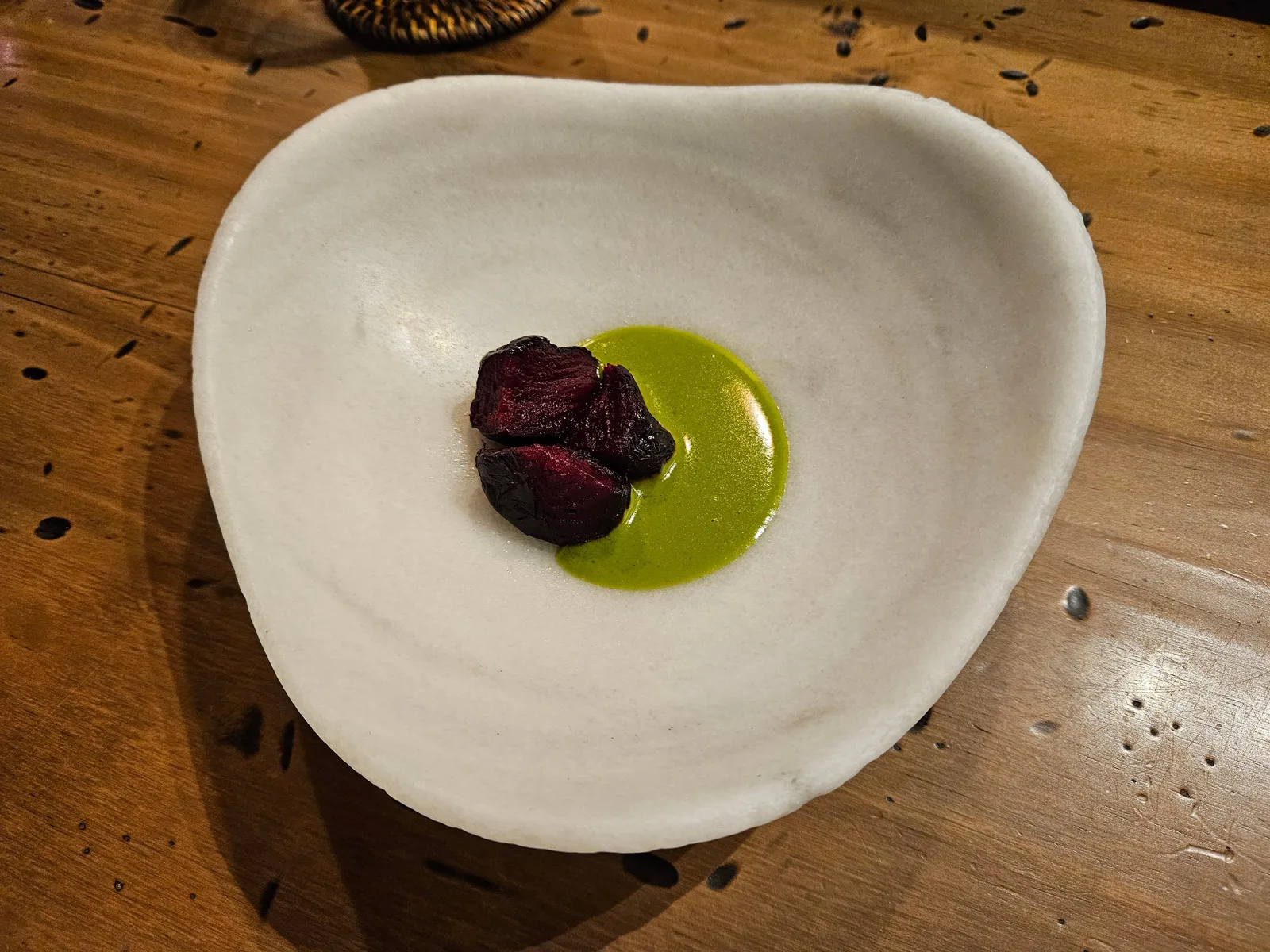 2 · 2 photosסלק באצות קודיוםRestaurante Bagá
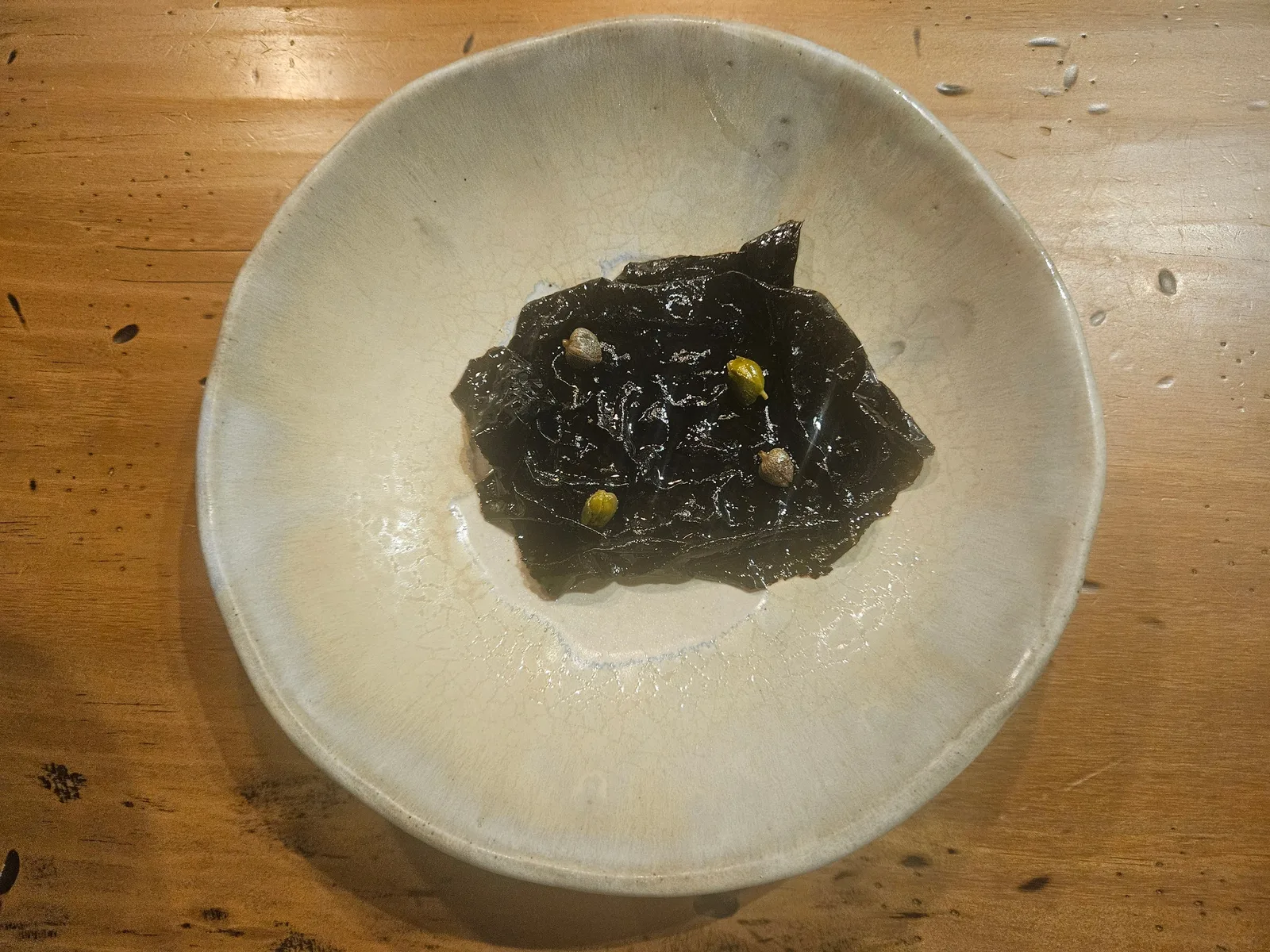 3 · 2 photosאצות נורי ברוטב מוניירRestaurante Bagá
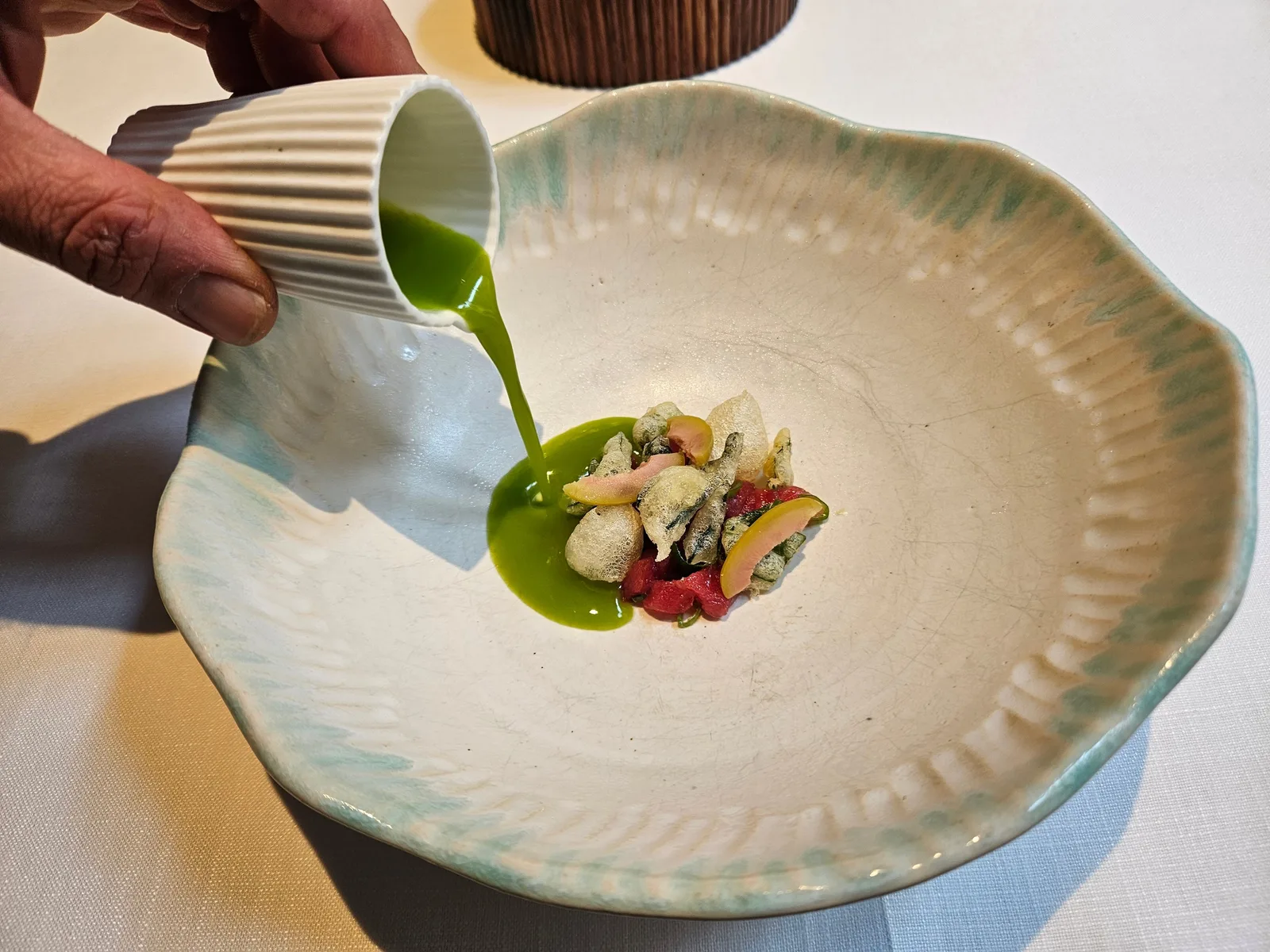 4 · 2 photosגספצ'ו חסה וחלפניו עם טונה ואצותKaleja